Render Unto Caesar
As Catholics we believe that God is at work in human history, but the way he works requires patience. Often things are clear in retrospect that are not clear when we’re in the middle of the fray. In today’s scriptures, we see enough history to be humbled, to detach from the short-term, and to anchor our foundations more deeply.
For example, our first reading today, from the book of Isaiah. The pagan king Cyrus is God’s anointed vessel, God’s chosen one, even though, it says twice, Cyrus himself does not know God.
To see how God used Cyrus without Cyrus even realizing it, it helps to zoom out to a view spanning generations. Israelite kings had become decadent and immoral. In response, God says to Israel, “ok, I still love you, but if that’s the way you’re going to be, have it your way, and reap what you sow.” And that’s Isaiah’s basic explanation why God allows Babylon to conquer Israel, and take the Jewish people into exile.
Now, in today’s reading, it’s generations later, and Babylon itself has also been conquered. As king of Persia, Cyrus has defeated Babylon, freeing the Jews, enabling them to return home. In other words, just like Babylon had once been God’s way of chastening Israel, now the Persians are God’s way of restoring Israel.
Imagine how confusing it must have been to live as a faithful Israelite caught in the middle. You’re watching Babylon conquering Israel…or maybe you’re living in the middle of the long exile…or you’re watching the Persian counter attack…at any one of those stages, it would have been hard to untangle the good guys from the bad guys, to understand clearly how the hand of God might be guiding history. You’re most likely an innocent peasant, but maybe you’re a player like Daniel in Nebuchadnezzar’s court. But either way, you hold fast, refuse to compromise on the essentials, risking even martyrdom, trusting that somehow God is at work.
And God was at work! Keeping the faith was the right to do. But to hold fast requires a deep anchor in the faith, an identity built around patience, humility, and trust.
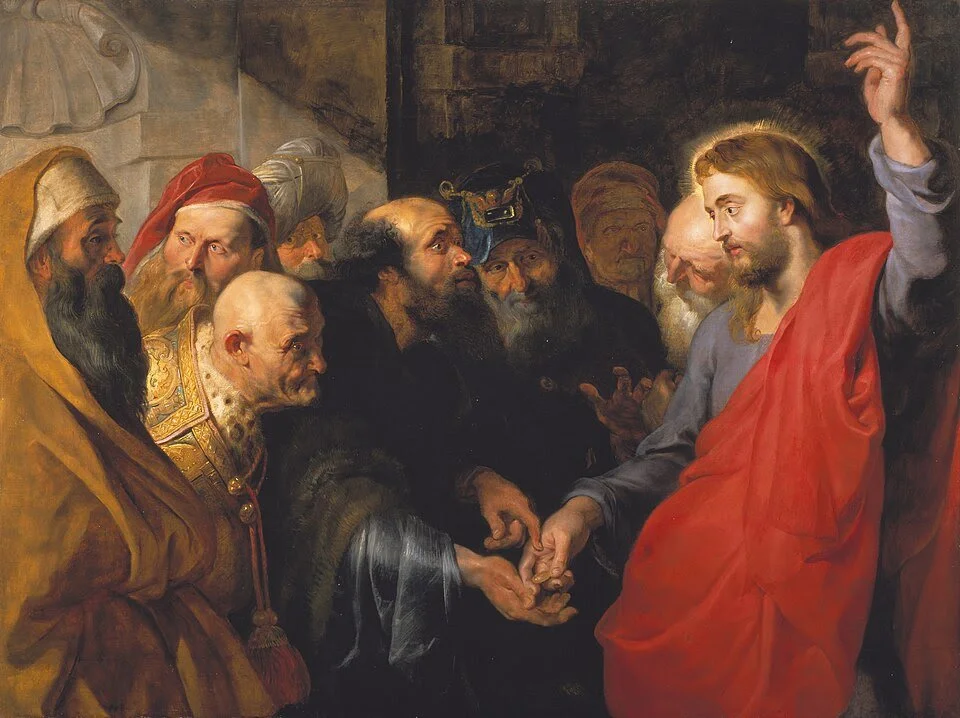
Today’s Gospel makes a similar point in a different way. In the Gospel, it’s no longer Babylonians versus Persians. Now it’s Pharisees and Herodians. This time, the two rivals are united in a strange way. The Pharisees are the ones who resent the Roman empire. The Herodians are Jews allied to Roman power. For these two parties to be united in today’s Gospel is shocking. What they have in common is that both are angling to use Jesus for their own political advantage.
The Pharisees and Herodians together ask Jesus whether it’s lawful to pay Caesar’s tax. If Jesus says yes, then the Pharisees will say he’s collaborating with the empire. If he says no, then the Herodians will say he’s rebellious.
It’s a trap. What does Jesus do? He does not "both sides" it. He does not weigh up the pros and cons of the Pharisees and the Herodians in order to choose the lesser of two evils. Instead, he refuses the false choice, and calls our attention to a deeper identity, our deeper anchor. Give Caesar his due, he says. But Caesar’s significance is limited, relativized, and small, because Jesus immediately adds “and give God what belongs to God.”
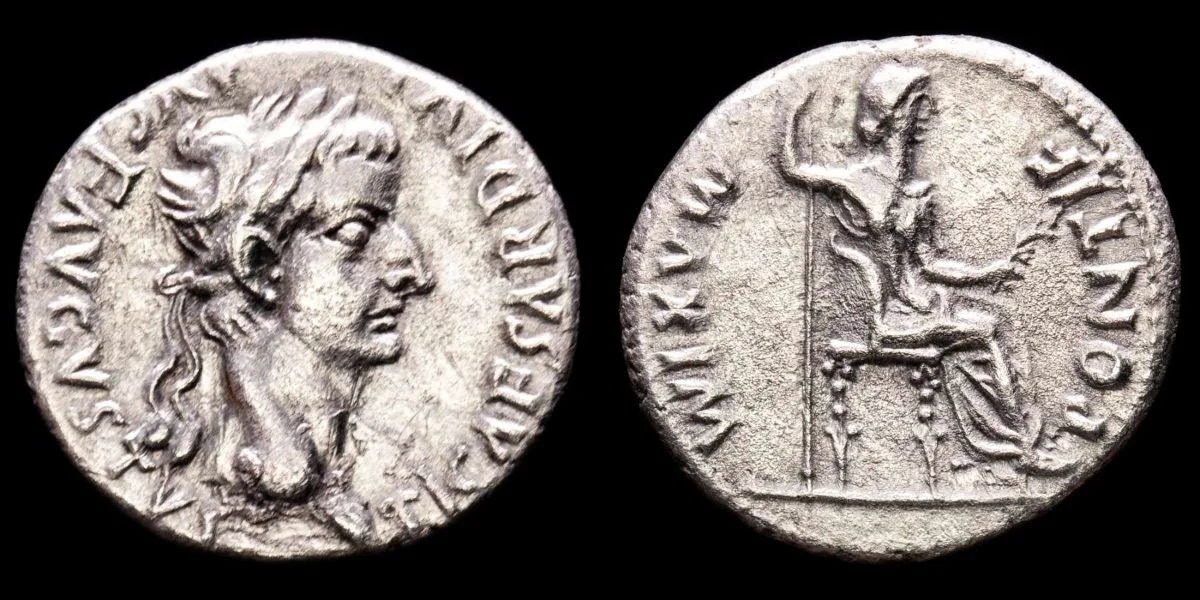
What belongs to God? Everything that matters. Caesar’s image is on the money to pay the tax. But God’s image is on us, on our souls. Jesus is calling us to self-examination and repentance, warning how dangerous it is to over-identify with the world’s way of seeing. The most important thing about politics is to keep your identity anchored in what’s deeper than politics.
Friends, watching the Babylonians fight the Persians, watching Pharisees and the Herodians try to manage Jesus for their own purposes - this is not just ancient history. How might God be chastening our nation or our Church? Is our Catholic identity deep enough to hold fast during an exile? Are we wise enough to see through the false choices of today's Pharisees and Herodians?
Elections are two weeks away. We must make prudential judgments about what our conscience requires here and now…but we also have to make sure our passions don’t overtake us, that we stay anchored in what is most deeply real. Political drama will always tempt us to a sub-Catholic tribal identity. Our first loyalty must always be the faith – we must let our conscience be formed by the faith – and hold any worldly partisanship at arm's length.
For example – and let’s consider carefully whether our media and internet diet is feeding us on these truths – but our Catholic faith teaches us to love the poor…and also to be pro-life. Our Catholic faith teaches us to seek social justice…and also to seek holiness through chastity. Pope Francis’ encyclical Laudato Si teaches us to care for the earth…and also to denounce abortion. Pope Leo says treat the immigrant with dignity, but he’s also against open borders. John Paul II critiqued the death penalty and IVF in the same encyclical. Benedict XVI criticized both capitalism and Marxism.
Sorting through these tensions, and the common roots of all these teachings, requires more than a quick summary in a homily. A common denominator in Catholic social teaching, and which secular politics reliably obscures, is always going to be the imago dei, and how to honor God's image in the human person. But the main point for today is to avoid the allure of false choices. The point is to patiently listen to what scripture is saying, to the totality of Jesus's teaching. Church is the place where we open our consciences for formation. Church is the place where we patiently wrestle with the tensions, and talk patiently with each other as we try to discern what is required of us today.
We may need, from time to time, to get involved in politics. But always firmly anchored in the faith, clear about where our ultimate citizenship lies. This week, I happened to have conversations with two old friends. One practices immigration law. Another is a pro-life activist, and we were on the phone looking for housing for a mom in a crisis. Both of these men are in the political fray, but in very different ways. They’re both Catholic. It takes courage and wisdom, prudence and prayer to live this way. Give to Caesar what is Caesar, but to God what belongs to God.
To borrow another famous phrase, you might say it’s a matter of being in the world, but not of it. We have no choice but to live the drama of our times; we don't get to pick the weather. But we do get to choose where we put our anchor. We should tether ourselves to the Eucharist, the supernatural reality on this altar. This altar is necessary for rendering to God what belongs to God. This altar is where we learn patience, humility, and trust. Our real political party is the communion of people who gather around the altar. We will be fed here, we will offer the deepest prayers of our hearts here, no matter what Caesar might get up to.