Merry Christmas Homily
The world is a tough place, full of suffering and sin, and so what is God going to do about it? He’s going to send a baby. But maybe that strategy isn’t our obvious first choice, if we were in charge. How does a baby help anything? We might need a minute to think that one through.
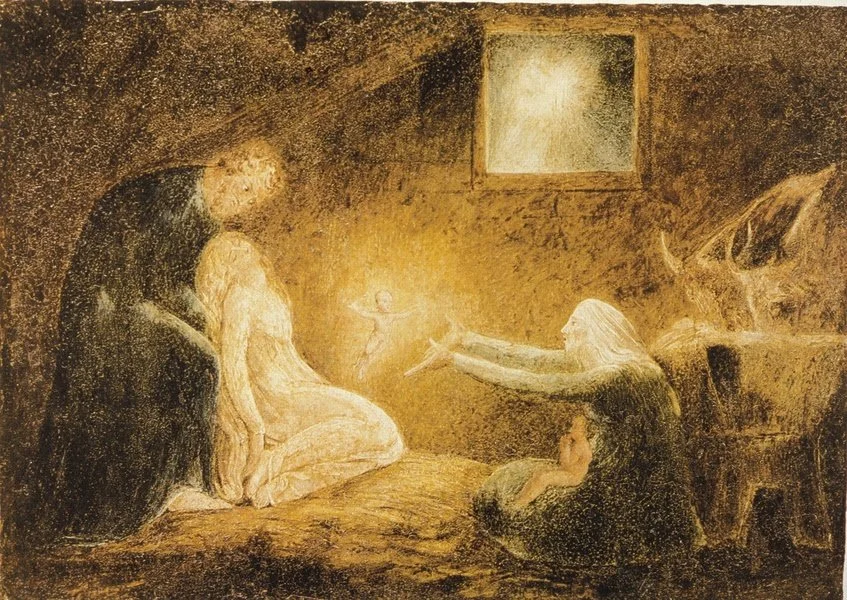
Gerard Manley Hopkins says that in that baby, infinity is dwindled into infancy. GK Chesterton says when this baby lies in the manger, the hands that made the sun and the stars were too small to reach out and touch the huge heads of the nearby cattle.
No matter who you are - no matter how hardened or discouraged we might be - if we have heard this Christmas story, we cannot unhear it, we cannot unthink the rumor that infinity was concentrated into an infant. A possibility has taken root in our imaginations. “Emmanuel” means that God is willing to be alongside us and inhabit creation. The possibility arises that despite the suffering, this material world is not a trap to be endured, but a cosmos that can be sanctified.
Furthermore, if the incarnation is real - if the creator has affirmed what he made and entered into it - then the options available to us in our lives change. Perhaps our everyday lives can be spiritually significant. This is the Catholic, sacramental way of seeing the world: the path between the created world and the eternal world is a two way street. If he can come down, we can go up.
The hedonist says “eat, drink, and be merry, for tomorrow we die.” If the material world has no deeper meaning, if we’re all just whistling past the graveyard, then the hedonist has a point. Prestige, power, ambition, sensuality, wealth - these things are all helpful varieties of anesthesia. And sorry, it’s bad luck if you’re poor, infirm, unattractive, or otherwise stuck.
But what if - really - what if he lowered himself into the world, in order to lift us up. Could our everyday embodied life also be spiritually significant? What if our possessions and wealth are not costumes we wear to impress other people (to influence, to pose), but gifts we receive from God, and gifts we can offer to others? What if the passage of time is not something to endure and dread, but an opportunity for prayer and love? In the sacramental world, where spirit can animate flesh, meals become fellowship, houses become hospitable homes, bodies become temples.
And if God really became one of the poor and lowly, then the way we think about being rich or poor, sick or healthy, ambitious or humble - the way we think and respond to suffering changes. What if being poor, sick, or suffering might actually give us a spiritual advantage. What if, when we are humble and penitent, when our hearts are soft and open, he is especially likely to enter in.
If he came down to our level so that we could rise up to his, then the point of our lives changes. All of the sudden, we realize that life is an invitation, a massive opportunity to learn to love as God loves. This is what we’re here for. If we really drill down to the reason a Christian gets out of bed in the morning, it’s because we have a mission - to configure our lives into communion with God.
Whether we’re suffering or flourishing, rich or poor - we always have a mission. The end game is to learn to love like God loves, and we can do this, no matter our situation in life. We can do this not because we are strong and self-sufficient, but because God’s graces and gifts are real.
The human heart is complicated. If we have any degree of maturity and self-knowledge, we must confess that we are mysteries to ourselves, unable to change at will, reliably crooked and fallen. Changing our hearts - living in such a way that we ever so slowly turn to God, that our lives become lives of ascent to God - is one reason why we have Church, why we have sacraments. It’s even why we have morality - we say “no” to certain things in order to say “yes” to better, deeper things. We’re honest, even when a lie might be more convenient, because the truth will set us free. We’re generous and patient, even when we want to assert our rights, because you have to lose your life to save it, because you have to give it away to grow. We’re chaste even when we’re feeling lustful, because appetite is not something you want to feed.
In this light, all the traditional spiritual practices take on new light. Fasting detoxes the heart and subverts greed, lust, gluttony. Almsgiving redirects selfishness to generosity. Confession reanimates cold, numb hearts. Worship and liturgy redirect attention from self to Creator. New life starts by aiming our hunger towards the right things, with the slow and hidden transformation of what we desire, until we are feasting on God. We cannot be healed if our appetites are broken, if our desires are aiming at the wrong things.
Christmas says that the rumors are true, that the Creator really did become a baby, that he came down so that we could go up. The good news is that the baby in the manger changed everything. Infinity really was concentrated into infancy. Every day - but especially this day - is an invitation to respond.