
Let’s Get Off the Floor of Life
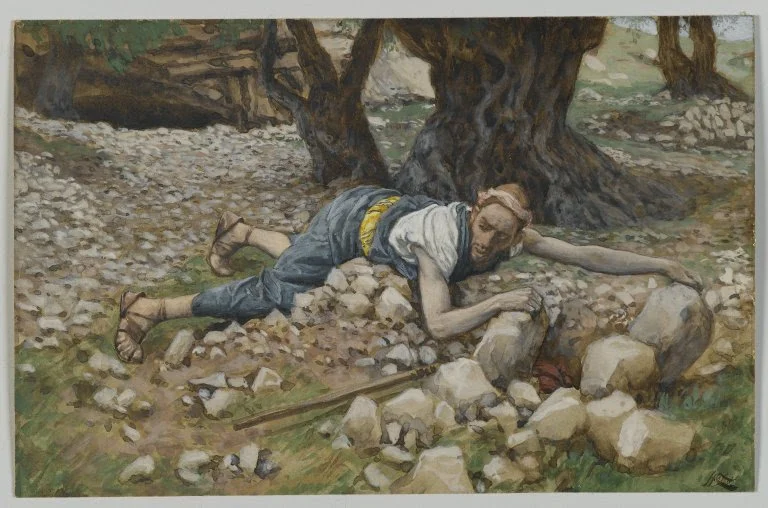
James Tissot painted today's parable in the late nineteenth century. What moment in the story do we see here? Maybe this man has found the treasure, and his heart is just starting to shift. It's the moment of decision. Will he get off the floor of life? Will he buy the field?
The other day Scott Simon, a radio host, told a story about being a little boy and living with his dad in a small apartment. The Mom had run away. His father had a drinking problem, and his dad’s inability to control himself had broken the family. Worse still, the father knew his son was getting old enough to see through the lies, deception, and excuses. The father’s weakness lay exposed before the son, a humiliation which might have made the dad even more stuck in his defensiveness.
But the two of them were living together anyway, and they shared a pet. They had a little grasshopper, which they’d caught together on a camping trip. This grasshopper lived in a jar. Simon described watching his father crumble some leaves to feed it. Huddled around the grasshopper, taking care of something together, Simon sensed something shift in his dad. It seemed that as he cared for the pet, it was a chance for the dad to step back into his better self again. Simon said his father started “getting off the floor of life.”
“Getting off the floor of life.” I love that phrase. To be a little more theological about it, it’s that moment when a sinner finally comes clean. That moment when all the excuses have been shed. The freedom you find when you’re at rock bottom, but some rumor of hope and forgiveness is still whispering inside you. It takes courage to listen to the whisper, but something in our heart is able to shift and re-orient. The prodigal comes home, and, conceding his sins without dissembling, he’s nevertheless going to try again. This is getting off the floor of life.
If you have ever had a good thorough confession, it’s the same feeling.
And that’s how I see the man in today’s first parable. A man finds a treasure in a field. And it says out of joy, he goes and sells all that he has to buy that field. He sells everything – he rends his heart and changes everything – out of joy. He's not selling everything out of fear, punishment, or grim ascetic will-power. No! Something has shifted in his heart. He's woken up. He's on the scent, in the flow, upwelling from inside.
Don’t we want to be that guy! Who knows why this man had been wandering alone in the fields. I imagine he was on the floor of life. But he finds that treasure, something so beautiful that it fills him with a joy that re-orients everything. He sells his old life and seeks a new one. He’s encountered the kingdom of heaven, and now he’s all-in with Jesus. He is going to get off the floor of life.
Friends, this is the Catholic way of life. We are sinners. We’re knuckleheads. We are sometimes caught in webs of denial and self-deception so thick that we half-way believe own excuses. Our pride is agile at fending off the truth. But, when we find the treasure, if we're brave enough to let him in, God’s medicine is stronger than our despair. The sacramental life – our baptismal identity, our regular encounters with confession and Eucharist – gets us off the floor, re-orients us.
Today sequence of parables also ends with one about hell. Hell is real. Jesus mentions it a lot. Today we’re in Matthew chapter 13, but he makes similarly direct comments at least in chapters five, eight, ten, and 25. And that’s before we count Mark, Luke, and John. So Jesus is the good shepherd, he loves us, he forgives 70 times seven and all that, but sometimes, out of that love and care, Jesus also reminds us that obstinate sin has consequences. We need to focus. As a convert, I wish I could go back and have a conversation with my younger self. “Young man,” I might say, “you need to take a careful inventory of your habits and choices. You're skating close to the edge. Time to grow up.” Hells of all sorts – now and in eternity – usually of our own making – are real.
But – and this is crucial – the Catholic way of life is not doing the bare minimum to stay out of hell. Maybe sometimes and at some stages, grimly doing our duty is all we can muster. “Lord, I love your commands” was the refrain in today’s Psalm, but we don’t always actually love the commands, even the ones we know are ultimately good for us. Sometimes we chafe against the commands, and can only aspire to love them.
Heck, sometimes, forcing our selves to obey out of mere stoic discipline is actually a stage in getting off the floor of life. I remember once going on a walk with my wife in the Wissahickon. She suggested we say the rosary. I can’t remember what it was, but I was angry and moody about something. But I bit my tongue and said the rosary anyway. And I’m glad I did. As I pushed through the decades – a little grimly and ironically at first – my heart softened. Sometimes, just showing up, even with mixed motives, is the first step to progress.
But once we’re off the floor of life, we want to become that guy who buys the field and repents out of joy. Our second reading today from Romans mentions being “conformed to the image of the Son.” Conformed, or configured, to be like Jesus. That's the goal. If we follow Jesus, we should expect to suffer at points just like he did, but at the same time, Jesus was a man of joy. He’s the second person of the Trinity, and the Trinity is an eternal communion of love. Our destiny is to be configured to the image of Jesus, purified, holy, inserted into the intimacy and communion of the Trinity.
Some of you may have heard that my mom died a couple of weeks ago, on Memorial Day. Now my dad, also 90 years old, is on hospice. The other day my dad asked what I thought about purgatory. I said “dad, if you’re in purgatory, that’s good news. It means you’re part of God’s flock, you’re eventually headed to heaven. But many of us when we die, we’re not yet purified, we’re not yet holy enough to be inserted into the intimacy and communion of the Trinity. The Church teaches that purgatory is where we get finally configured into the image of Jesus, where we get purged of those last vestiges of sin, until we’re ready for the bright light of God face to face.”
That process of becoming holy, of being purged of our sin, of getting off the floor of life – there’s nothing better. In Dante’s epic poem about purgatory, the penitent are glad and grateful for their purgation. They know that as the sin is flushed out, they’re being resurrected. They know the sin is getting smoothed out of them so that they’re configured and prepared to meet God. They’re getting off the floor of life. They’re buying the field out of joy.
And the good news is, we can start living like this right now. We don’t have to hit rock bottom. We don’t have to wait until purgatory. We can confess our sins sacramentally. We can be honest in our prayers. We can ask those we have wronged for forgiveness. We can rise from the floor of life, walk down this aisle to the altar, and receive the Eucharist.
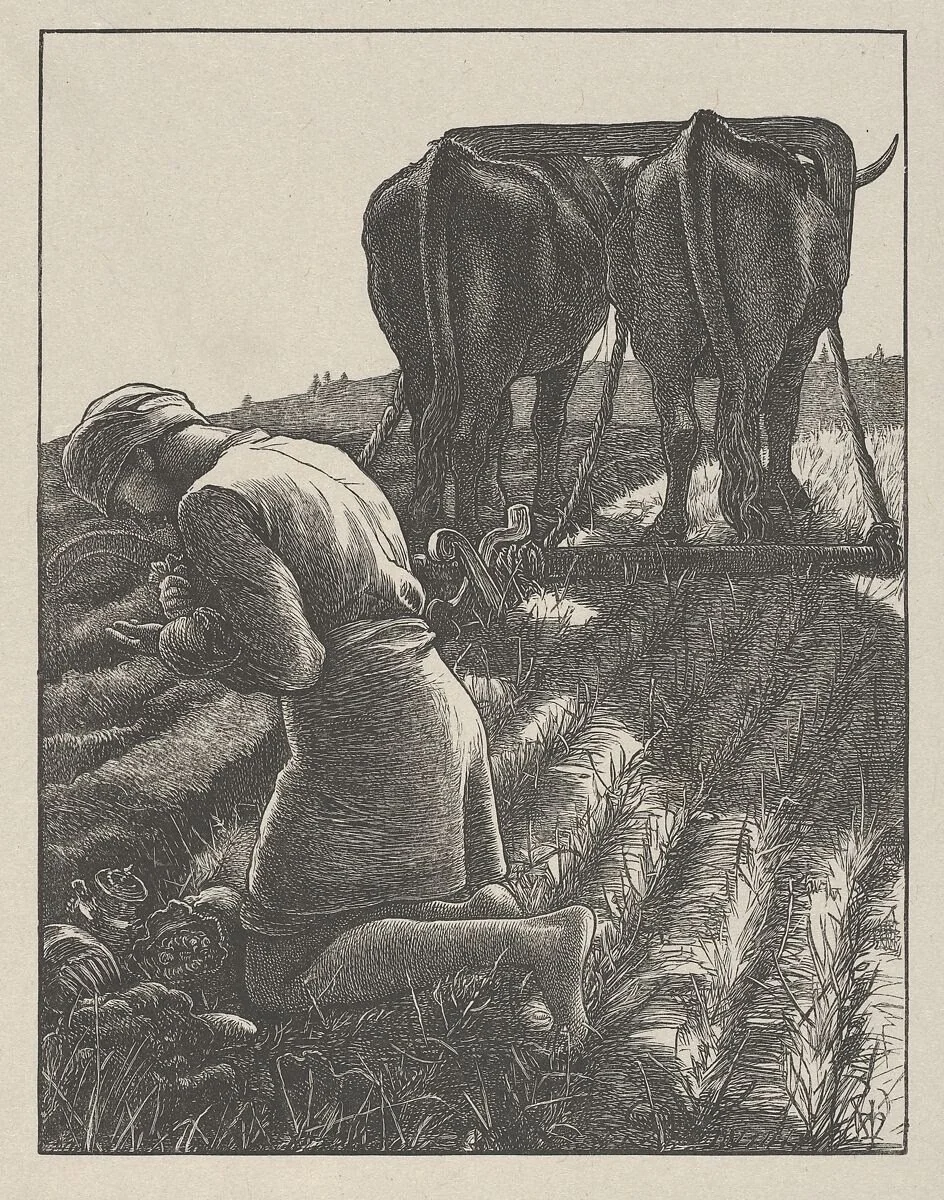
Next steps: get up, sell all, buy the field. Out of joy.